Mold Inspection
A full visual inspection with moisture-meter and humidity readings — walls, ceilings, HVAC, and the damp corners most people miss. Ask for photos and a plain-English findings report.
Find an inspector →We connect you with local, independent mold inspection and remediation pros for Lexington basements, crawl spaces, attics, and bathrooms. One call, and we’ll match you with a pro who can find the moisture source and get the mold out.
Mold Lexington is a free referral service. We don’t perform inspections or remediation ourselves; independent local companies do the work.
Prefer to talk it through first? Call the number above — tell us where you see it and when the water showed up. That’s enough to get you matched.
Leak or flood in the last 24–48 hours? Mold can start growing within a day or two of water damage. Dry it fast, and call to get matched with a local pro — (859) 354-4449.
Who we connect you with
One call to us gets you connected with independent local companies that handle the whole problem — from figuring out what you’re looking at, to removing it and drying the space so it stays gone.
A full visual inspection with moisture-meter and humidity readings — walls, ceilings, HVAC, and the damp corners most people miss. Ask for photos and a plain-English findings report.
Find an inspector →Air and surface samples sent to a lab when you need to know the type and spore count — for health concerns, real-estate transactions, and landlord–tenant documentation.
When testing makes sense →The core job: sealed containment, HEPA filtration, removal of affected material, antimicrobial treatment, and a final HEPA vacuum and wipe-down of the whole work area.
See how it works →Lexington’s most common call. Foundation seepage, sump failures, and summer humidity grow mold on drywall, framing, and stored belongings. A good remediation pro addresses the water entry point, too.
Get matched for a basement →Standing water, fallen insulation, and moldy joists under the house — and the musty air that rises into your living space. Pros typically handle cleanup, vapor barrier repair, and drying.
Crawl space details →Roof leaks and poor attic ventilation, bathroom exhaust that vents nowhere, and mold in ductwork and air handlers. Smaller jobs still deserve the same containment discipline.
Ask about a small job →Why it’s so common here
Central Kentucky gives mold everything it wants: humid summers, clay soil that holds water against foundations, and a housing stock full of basements and crawl spaces.
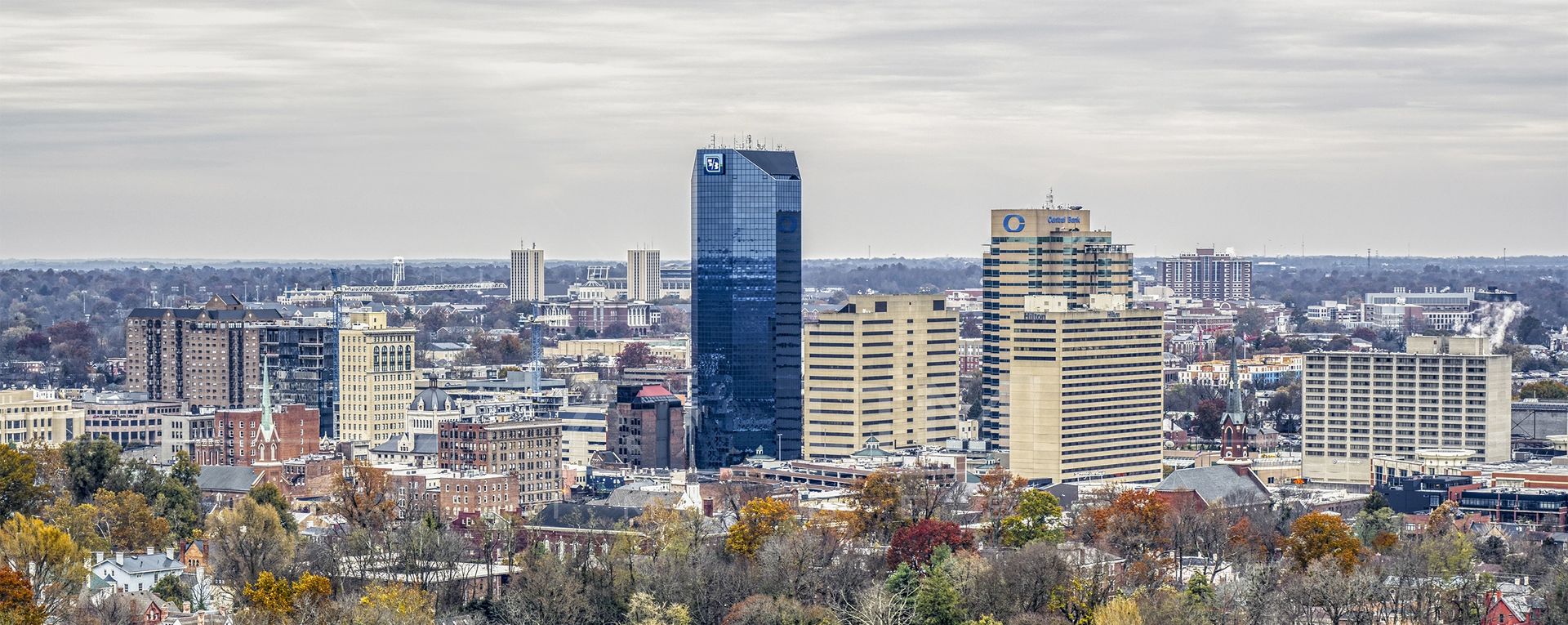
Downtown Lexington — we make referrals for every neighborhood in the urban service boundary and Fayette County, plus Nicholasville, Georgetown, Versailles, Richmond, Winchester, and Paris.
How remediation works
Professional remediation follows the same discipline whether it’s a bathroom corner or a full basement. Here’s what a professional job typically looks like, so you know what to expect from the pro you hire.
The pro inspects the visible growth and hunts the moisture source with meters and thermal checks. Mold without a water source doesn’t happen — fixing one without the other wastes your money.
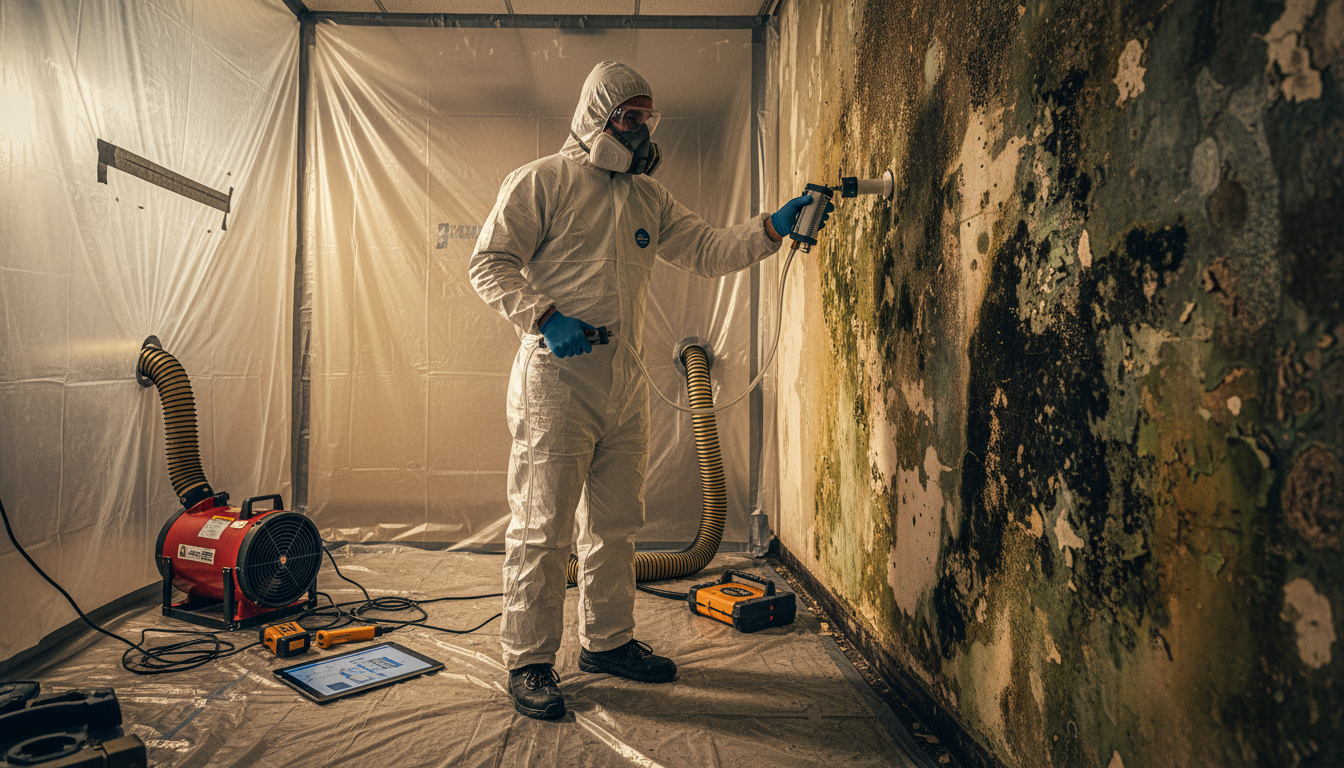
The work zone is sealed with poly sheeting and put under negative air pressure with HEPA scrubbers, so disturbing the mold doesn’t seed the rest of the house.
Porous material that can’t be cleaned (drywall, insulation, carpet pad) comes out bagged. Structural surfaces are HEPA-vacuumed, scrubbed, and treated with antimicrobial.
The space is dried to target moisture levels, given a final HEPA clean, and you’re walked through the fix — leak repair, ventilation, dehumidification — that keeps it from returning.
Under the house
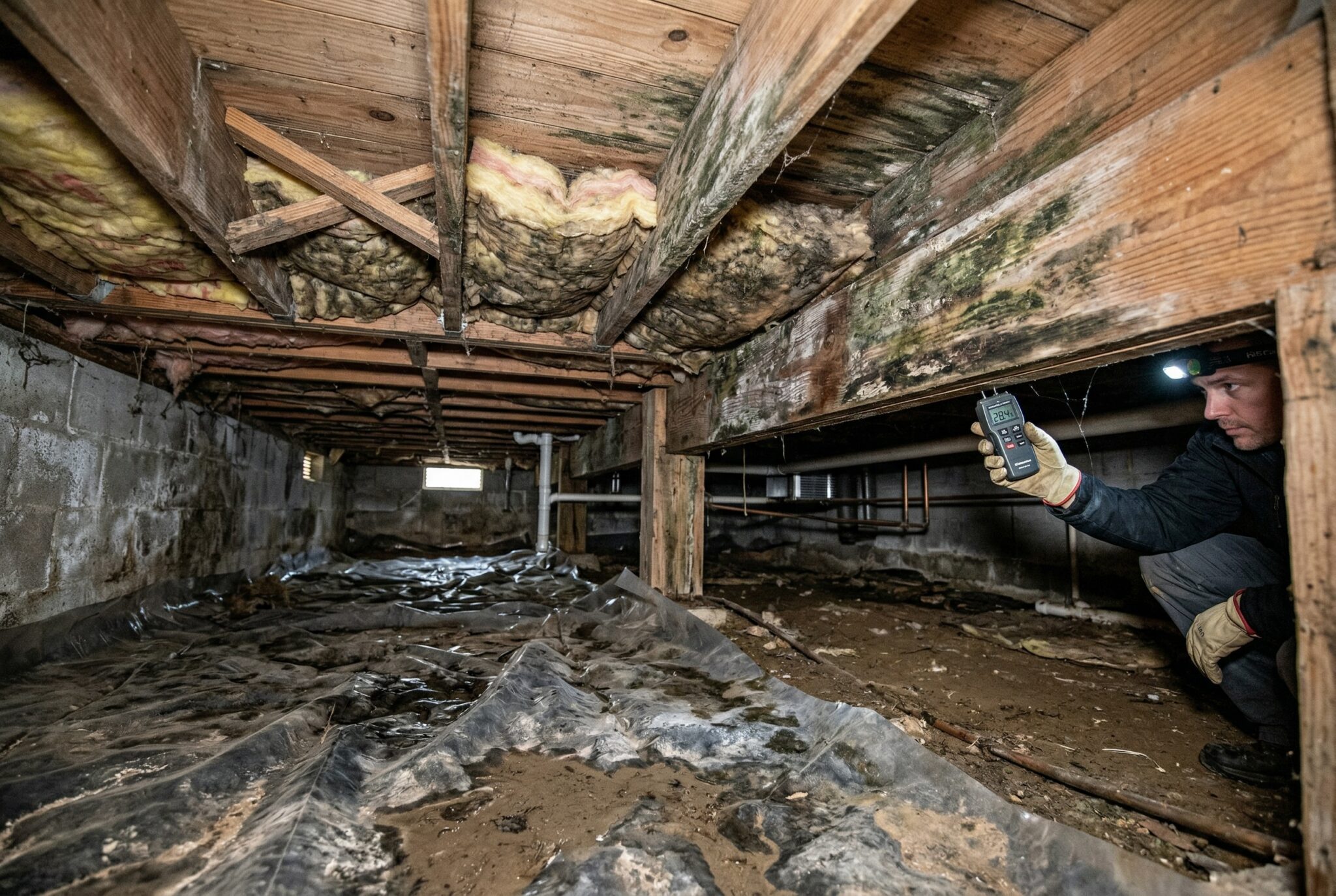
Roughly half the air you breathe on the first floor comes from below it. When joists and insulation look like this — dark staining, sagging batts, a torn vapor barrier, standing water after rain — the living space above pays for it in odor, allergies, and wood rot.
Should you call?
Any one of these is worth a professional look. Two or more together usually means there’s more growing where you can’t see it — behind drywall, under flooring, or inside the HVAC.
About “black mold”: color alone doesn’t tell you the species, and most household molds are handled the same way — remove the growth and the moisture. If species identification matters for a health or legal reason, a pro can test and let the lab answer it.
Pricing
Every home is different. The size of the affected area, the materials involved, and access all change the scope, so pricing is quoted by the pro after an inspection. Our referral is free. Call anytime and we’ll take your details, then call you back within one business day.
Service area
Referrals for all of Fayette County and nearby towns. Call anytime — we’ll call you back within one business day.
Don’t see your neighborhood? If you’re in Fayette County or a surrounding county, call (859) 354-4449 to get matched with a local pro.
Common questions
Straight answers, no scare tactics.
For a tiny spot on a hard, non-porous surface (tile, glass, a tub surround), soap and water is fine. Bleach is a poor choice on porous material like drywall and wood — it doesn’t reach the roots, its water content can feed regrowth, and it doesn’t remove the allergenic material. Anything bigger than roughly a 3×3 ft patch, anything that keeps coming back, and anything after a leak deserves a professional look.
Not always. If growth is visible, the fix is the same regardless of species: remove it and fix the moisture. Testing earns its cost when you need documentation — a home sale, a landlord–tenant dispute, a doctor’s question about exposure, or a musty smell with no visible source, where air sampling can confirm a hidden problem.
Small jobs are often done in a day. A typical basement or crawl space runs 2–4 days including drying time. Your pro should give you the schedule in a written quote, and containment usually means you can stay in the home during the work, with the affected area sealed off.
Only if the moisture does. Remediation removes existing growth; the prevention half of every job is identifying and fixing the water source — leak, grading, ventilation, or humidity — and verifying the space is dry before closing up. Ask your pro to walk you through what caused it and what to watch.
Often, when the mold resulted from a covered, sudden water event like a burst pipe — and usually not when it grew slowly from long-term neglect. Either way, ask your pro for photos and written findings to share with your adjuster, and get the quote in writing before any work starts.
Yes — we can connect you with local pros for pre-purchase and pre-listing inspections, and older homes are a common place to find hidden moisture. Ask about inspection before closing, lab documentation if needed, and a timeline that keeps your transaction on track.
Free referral · No obligation
Call, or fill this in and we’ll have your request ready to send in one tap. Tell us where the mold is, roughly how big the area is, and whether there’s been a leak — that’s enough for us to connect you with the right pro.
📞 (859) 354-4449
Calls answered 24/7 · Callback within one business day